Your shopping cart

BLACK WEEKS: The best deals of the year | Grab yours now
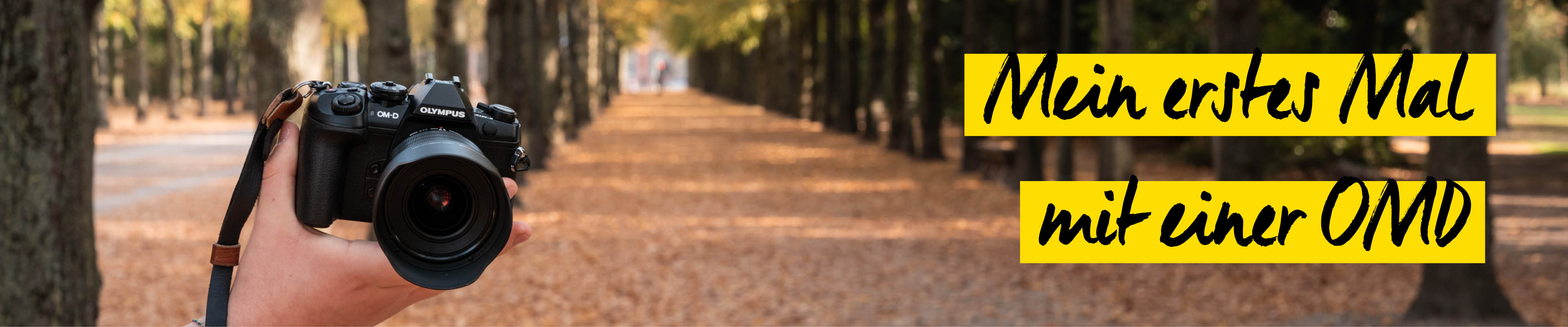
Photo walk with Olympus - E-M1 Mark II header

Practical test of the OM-D E-M1 Mark II

I have to admit quite honestly: So far I only worked with the Olympus system twice and always had an aversion to it. Two weeks ago I bought the E-M1 Mark II and took it with me on a photo expedition. You can find out the results, my first impressions and why I'm taking the Olympus with me again next time in this article!

The sensor stabilization:

Internal sensor stabilization is standard on many mirrorless system cameras. In my opinion, Olympus is one step ahead here and has installed an impressive 5-axis sensor stabilization. Because the MFT sensor is smaller than an APS-C sensor, there is plenty of room for perfect stabilization. This is particularly practical for slower hand-held shutter speeds and action shots. A year ago, the Foto Koch team was invited to a team event together with Olympus. There we were able to test the OM-D cameras in a speedboat on the Rhine. You can see how the sensor stabilization is noticeable in video mode in the video.

Technology facts:

  • 20 MP live MOS sensor
  • TruePic VIII image processor
  • ZUIKO Lens Systems
  • 5-axis IS
  • 4K video
  • 121 focus points, cross-type sensor
  • 18 fps RAW with AF-C
  • 60 fps RAW with AF-S
  • High-resolution images up to 80 MP
  • Two SD card slots

The autofocus

When a single focus point is selected, the E-M1 Mark II shows an extremely fast autofocus speed and high accuracy. Very important: Work with the latest firmware, because the software can change a lot of the autofocus performance!
During my photo walk I tried to activate all fields in between so that I didn't have to worry about the metering field, but unfortunately the OM-D often found another object to be important here. If I had installed the update beforehand, this wouldn't have happened. The E-M1 Mark II has integrated face and eye autofocus, which takes a lot of work off your hands when it comes to taking portraits quickly and precisely.

Why Olympus?

  • fast and powerful
  • Precision and functionality
  • Mobility and reliability
  • Robust construction
  • Compact size
  • Excellent image quality
  • First-class lenses

Optional audio recorder

Olympus has a new audio recorder for all photographers who also want to create videos or are journalists - the LS-P4. The external audio recorder can be used in a variety of ways and offers various advantages. The LS-P4 is also one of the first Linear PCM recorders in the world to be compatible with FLAC format recording. The recorder records audio at 96kHz/24-bit.

The device has three built-in microphones and is ideal for use as a dictation machine. With the supplied flash shoe adapter, the recorder can be attached directly to the camera. Various options are available for playback of the recording:

  1. Integrated speakers
  2. 3.5mm jack output for headphones
  3. Bluetooth connectivity

Audio recorder in practical use

What impressed me most about the LS-P4 was its user-friendliness and extremely compact dimensions. I used the recorder at a wedding because I try to collect as many audio tracks as possible so that I can later use an excerpt from a speech in a video, for example.

To do this, I simply plugged the LS-P4 into the DJ mixer and connected it to a master output on the mixer using a 3.5mm jack - 6.3mm jack cable. I immediately checked the sound via the recorder's headphone output and was a little surprised that it was set perfectly straight away. I didn't have to worry about the sound level at all! The recorder ran for 6 hours and now I'm having a lot of fun picking out the 30 seconds I actually need.

My conclusion

Although I was a little skeptical at the beginning of the test, I was very surprised at the possibilities offered by the Olympus system. On the technical side, the lens selection and sensor stabilization are particularly exciting for me, but even more important to me is the handling. The different camera systems are very often compared exclusively on a technical level, but for me this now plays a rather subordinate role. Of course, there are situations in which a certain brand or product offers a technical advantage that is indispensable, but the theoretical specifications often play a lesser role in everyday life.

The Olympus OM-D E-M1 Mark II with its high-quality and extremely robust magnesium body is very comfortable to hold and has a good grip. I personally also really like the shutter release and the pressure point of the buttons! The camera simply feels very valuable in the hand. The replay button in the thumb position has become somewhat rarer - I think it's great that the E-M1 Mark II has this button layout. I can only recommend anyone who is thinking about buying a new camera system, as well as anyone who already uses Olympus, to try out the camera and get to know it. Olympus is currently offering an ingenious promotion for this. "TEST & WOW" Particularly interested people can try out the most important Olympus products - we offer you the opportunity to test your desired equipment for a whole day


Olympus OM-D E-M1 Mark II

More blog articles about Olympus

Everyday Camera — The best camera is the one you actually take with you! (Martin Krolop)

Cameras that keep getting bigger, lenses that keep getting heavier, more and more gear—and eventually, the camera just stays at home. Yet it’s often the spontaneous moments in everyday life that result in our most beautiful photos. Why do we constantly lug around gear that, in the end, keeps us from taking photos more than it helps us? A talk about the freedom of small cameras, the joy of spontaneous photography, and the realization that less gear sometimes leads to more and better pictures.

Watch it again

The Myth of Sensor Size (Martin Krolop)

Better image quality, more 3D depth, more vibrant colors, and more professional-looking photos—for many, full-frame is considered the gold standard. But which of these supposed advantages can actually be proven physically, and which are simply myths that have become ingrained in our minds over decades? We take a look behind the scenes of camera technology, examine the influence of marketing, camera prices, and product categories, and separate genuine physical advantages from persistent misconceptions. A talk that debunks some of photography’s common myths and shows why bigger doesn’t automatically mean better.

Watch it again

Renowned wildlife photographers Arthur Lefo and Hendrik Karlsson have shared insights into their experiences using OM SYSTEM cameras and lenses in their workflow. We’ll give you an overview of their inspirations and favorite features. We’ll also take a closer look at Hendrik Karlsson’s product review of the M.Zuiko Digital ED 50-200mm F2.8 IS PRO telephoto zoom lens and why he’s eager to head out into the field with it again.

Firmware update guide

A firmware update for the camera is often ignored, but it can significantly improve performance and functionality. Find out in this guide what firmware updates really do and how to install them correctly.

View now

OM System M.Zuiko 50-200mm F2.8 IS PRO: The new telephoto zoom for more flexibility in nature photography

If you want to go out into nature with light luggage but don't want to compromise on range, the new M.Zuiko 50-200mm F2.8 IS PRO from OM System is the perfect lens. It combines professional performance with real mobility and sets new standards in the Micro Four Thirds system.

Read now

Lightweight photography on the go ! The new OM-5 II

Anyone looking for a small, lightweight all-rounder with compact lenses will quickly end up at OM System. We had the opportunity to test the new OM-5 II before the official release date and present all the new functions and features here.

view now

OM SYSTEM OM-3 - Style without compromises?

OM SYSTEM is now launching a new lifestyle camera on the market with the new OM-3. Under the motto Born to Create, they are bringing back a true icon from the 80s - just with a modern twist!

view now

Interesting campaigns

Camera Basics #19: Tilt shift lenses and the effect explained

The tilt shift effect is certainly an old shoe for many photographers, but this effect is very interesting to consider because it can be found in many facets of photography, so the use of tilt shift optics is not only at home in architectural photography.

Read now

First test of the Sony 16-35mm f2.8 GM2 compared to the 16-35 GM1

The new Sony 16-35mm GM2 is here and sets new standards! It is lighter, sharper and even more compact than its predecessor! Therefore, we show you today the direct comparison of the two G-Master lenses and show whether an upgrade is worth it!

Read now

Camera Basics #12: Getting started with macro photography

Imaging small objects and details in a big way! That already describes macro photography very well! But what exactly could be a motif for this type of photography? Soap bubbles, insects, flowers, snowflakes and much more, that could include the shots as a motif.

learn more

The right binoculars for hunting

Finding an animal at a distance is not always easy, whether stalking, battue or driven hunt. A pair of binoculars as a perfect companion for hunting must require various criteria such as weather resistance under any condition, whether heavy rain or fog.

Read now

Also interesting

Black Weeks—the best deals are waiting for you!

Look forward to our daily Black Deals, which are only available for a limited time!

Get the best deals

Rate and win!

Your opinion matters! That's why you now have the chance to enter the drawing by reviewing a product of your choice and win one of three €100 gift cards!

Join now!

That was 2025 at Foto Koch

That was your year in products. We take a look back at the most popular cameras, the biggest trends and your best-selling favorites of 2025.

Read now

Sony - The Choice for Travel

Sony offers the perfect gear for your travels! Whether it’s a city break, a road trip, or a long-distance journey, with the Alpha cameras and G and G Master lenses, you can capture every adventure with ease, sharpness, and impressive quality.

learn more